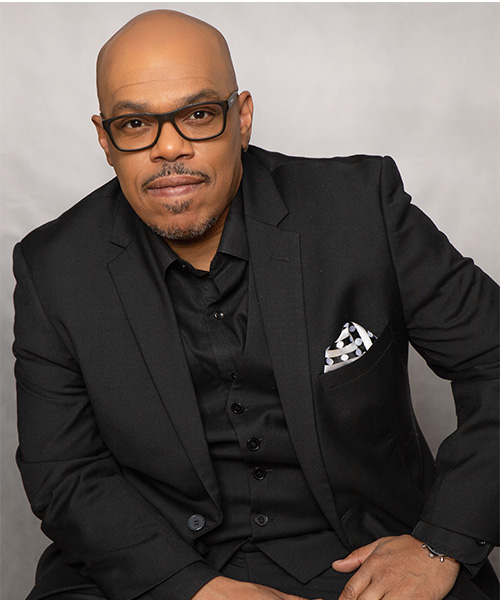
Rev. Eli Wilson, III is a pastor, theologian, and community leader with more than twenty years of experience in ministry, theological education, and community engagement. He serves as Senior Pastor of St. Albans Congregational Church, United Church of Christ, in Queens, New York, where he leads a historic, multigenerational congregation with a commitment to spiritual growth, compassionate service, and connecting faith with everyday life.
A native New Yorker and the son of a Baptist minister active in church music ministry, Rev. Wilson was raised in the church. This foundation continues to shape his dedication to caring for God’s people and preparing congregations to respond to the opportunities and challenges of the twenty-first century. His guiding philosophy is “To Keep the Word of God Alive Through Theologically Sound, and Biblically Based Living.”
Rev. Wilson holds a Master of Divinity from Princeton Theological Seminary, a Bachelor of Arts in Religious Studies from Hampton University, and an Associate of Science in Film and Video from Full Sail University. He is a Doctor of Ministry candidate at the Interdenominational Theological Center in Atlanta, Georgia, with the Class of 2026. His preparation brings together theology, pastoral leadership, and creative communication.
After serving as Associate Minister at St. Albans from January 2017 through September 2019, Rev. Wilson became Senior Pastor in October 2019. He guided the congregation through the COVID-19 pandemic, sustaining worship, pastoral care, and community outreach during a period of profound disruption. Under his leadership, the church retired approximately $175,000 in mortgage debt associated with the third floor of its Family Life Center in December 2020 and returned to full on-campus worship in January 2022.
His ministry experience includes service as Resident Pastor at St. Paul Community Baptist Church in Brooklyn, Media Specialist at New Covenant Baptist Church in Orlando, Coordinator of Teens and Young Adults at Second Baptist Church in Aiken, South Carolina, and Pastor of Young Adults at New Faith Church in Houston. Across these roles, he has supported spiritual formation, mentored emerging leaders, and developed programs connecting worship, education, and community service.
Rev. Wilson’s leadership extends beyond the congregation through civic partnerships and public service. He serves as Clergy Liaison to the NYPD’s 113th Precinct, a member of the Queens District Attorney’s Clergy Advisory Board, and, since 2024, a volunteer chaplain with the Metropolitan Transportation Authority. These roles reflect his commitment to pastoral care, community dialogue, and collaboration among faith communities and public institutions.
In 2024, he founded **Because We Care, Inc.**, a faith-based organization dedicated to outreach, community development, and practical support. Through this initiative and his pastoral ministry, Rev. Wilson works to strengthen the church’s capacity to meet local needs and help individuals and families thrive.
Rev. Wilson’s life and ministry center on helping people recognize the connection between faith and daily living. Through preaching, teaching, responsible stewardship, and compassionate leadership, he equips congregations to realize their spiritual and communal potential and serve as sources of care, hope, and opportunity.
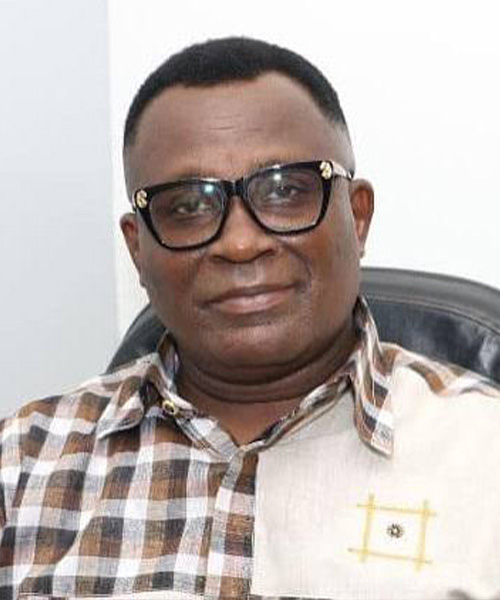
Dr. Lawrence Boakye is a philosopher, educator, and author whose scholarship explores the relationship between philosophy, religion, culture, and human development. His areas of specialization include the philosophy of religion, metaphysics, African Indigenous Religion, peacebuilding, and conflict resolution. His work brings philosophical inquiry into conversation with contemporary questions of identity, education, community, and sustainable development.
Dr. Boakye earned his PhD in Ethics and Human Science from the University of the Holy Cross in Rome, Italy, where he also completed a Master of Philosophy and bachelor’s degrees in philosophy and theology. He further developed his educational practice through the Texas Teaching Fellows Program in the United States and a postgraduate certificate in international academic practice from Lancaster University in the United Kingdom.
Central to his research is an interdisciplinary examination of African epistemology—the ways knowledge is understood, developed, and transmitted within African societies. He studies African worldviews, indigenous cultures, and knowledge systems as essential resources for understanding change, encouraging innovation, and advancing sustainable development. His scholarship considers how these traditions can contribute to broader discussions of human flourishing and contemporary social challenges.
Peacebuilding is another major focus of Dr. Boakye’s work. Drawing on ancient philosophy and the thought of Thomas Aquinas, he examines the relationships among the individual, community, and authority, exploring their implications for peace and conflict resolution. His publications include Peace Building: The Person, the Community, and Authority, a Contemporary Thomistic Approach (2009) and The Quest for Peace in Ancient Philosophy (2010), as well as the chapter “Thomas Aquinas Theory of Peace” (2014).
His wider publications address education, human existence, and African religious traditions. These include Educating the Person: Classic Concepts and New Perspectives (2010), Existentialism: A Close Analysis and New Perspective (2012), and a study of changing perspectives on Wasa Amenfi traditional religion that considers the contribution of the late Osofo Komfo Damuah (2015). Through his research, writing, and educational practice, Dr. Boakye connects philosophical reflection with the lived experiences of individuals and communities. His work highlights the continuing relevance of African indigenous knowledge, religious traditions, and ethical inquiry to peace, cultural understanding, and human development.
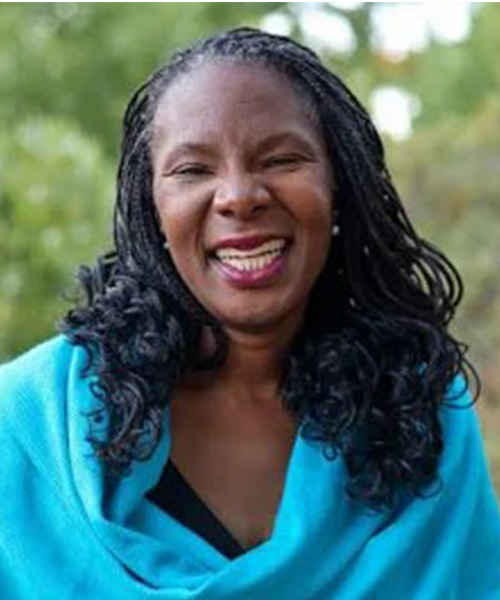
Dr. Melanie L. Harris is Executive Director of the Ecowomanist CIRCLE, a Center in Research, Climate Justice, Leadership and the Environment. She also serves as the Director of the Food, Health and Ecological Well Being Program at Wake Forest University where she teaches and conducts research in African and African American Studies, and Ecowomanist thought. Dr. Harris is a graduate of the Harvard Leadership Program. Through her work as an administrator she creates rigorous academic programs, builds curriculums and supports student and peer mentoring. Her research critically examines intersections between race, religion, gender and environmental ethics. She is the author of many books and scholarly articles including Gifts of Virtue:Alice Walker and Womanist Ethics (Palgrave), Ecowomanism: Earth Honoring Faiths (Orbis), Ecowomanism, Religion and Ecology (Brill) andco-editor of a forthcoming book, The Ecowomanist Circle (Routledge) featuring essays by two of today’s panelists.
Dr. Harris is a former broadcast journalist who worked as a news producer for ABC, CBS, and NBC affiliates. A community leader whose passion for education is linked to a commitment to social justice, she has also served as an educational consultant with the Ford Foundation, the Forum for Theological
Exploration, and the Wabash Center for Teaching and Learning in Theology and Religion, Lilly Endowment Inc. She has also held leadership positions on the executive board of the Society for the Study of Black Religion, the Board of Directors of KERA-TV/Radio, the American Academy of Religion and the Society of Christian Ethics.
Dr. Harris has been awarded several prestigious awards and academic fellowships including teacher of excellence at Wake Forest University, the AddRan College of Liberal Arts Administration Fellowship at Texas Christian University and the GreenFaith Fellowship. Dr. Harris earned her PhD and M.A. degrees from Union Theological Seminary in The City of New York, an M. Div. from Iliff School of Theology and a B.A. from Spelman College.
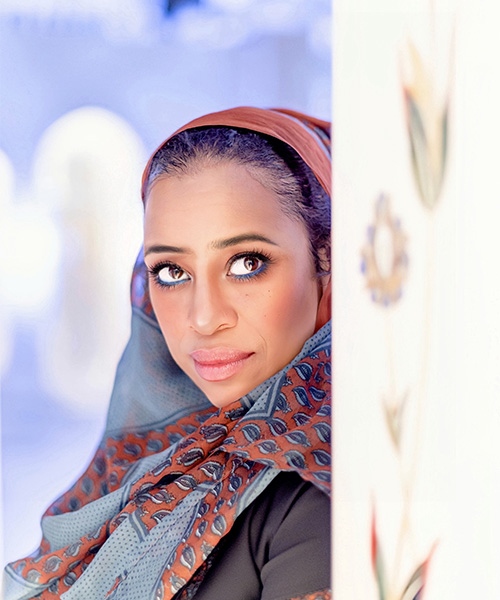
Sahr Ali is a cultural strategist, community organizer, artist, and nonprofit leader based in Brooklyn, New York. She is the Founder and Executive Director of Black Muslims Now (BMN), a grassroots nonprofit organization dedicated to advancing visibility, unification, and empowerment for Black Muslims through community service, political advocacy, cultural preservation, and community-building.
Through BMN, Sahr develops initiatives focused on civic engagement, cultural programming, historical preservation, voter engagement, community service, and strengthening connections within Black Muslim communities. Her work centers on elevating Black Muslim and Black American Muslim histories, supporting community-driven solutions, and building bridges across generations, communities, and the global African diaspora.
Sahr is also the co-founder of Heirs to the Call, a cultural and historical journey initiative that grew out of relationship-building efforts in Palestine and connects Black Muslims to Black Islamic legacies, sacred histories, and ancestral memory across Africa and the diaspora. She is also a co-founder of MUSAWAH, a collaborative network of Muslim women nonprofit leaders committed to mutual support, partnership, and collective impact.
She previously served as Vice Chair of the Black Muslim Leadership Council (BMLC) and contributed to the development of their Black Muslim Policy Agenda, which was presented in meetings with President Joe Biden and Vice President Kamala Harris during their administration.
As an artist, organizer, and institution-builder guided by a deep love for her people, Sahr is committed to elevating Black Muslim culture and heritage, strengthening community, and helping ensure that the histories, contributions, and legacies of Black Muslims are carried forward for future generations
Black Muslims Now (BMN) is a New York City-based grassroots nonprofit organization dedicated to advancing visibility, unification, and empowerment for Black Muslims through community service, political advocacy, strategic programming, and the elevation of Black Muslim culture and heritage. BMN creates racism-free spaces where Black Muslims can connect, build community, celebrate culture, engage in service, preserve history, and strengthen relationships across generations and throughout the Black Muslim diaspora.
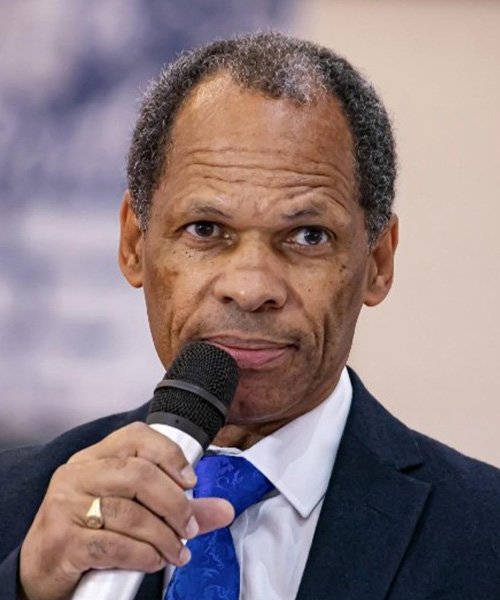
Rev. Herman Adza Mould – is currently pastor of the River South Community, London UK.
Born in Accra, Ghana, he moved to the UK in 1980 soon after the AFRC handover to civilian government, and worked with the “Campaign for Democracy in Ghana” to secure and defend the fledgling democratic dispensation. After the return of military rule at the very beginning of 1982, he found himself exiled from his homeland until 1995.
In the meantime, he began a search for spiritual understanding that could make sense of the intractable crises of humankind, leading to him becoming a missionary in the Unification movement, and after further study at the Unification Theological Seminary, taking a pastoral role in one of the biggest “Unification” congregations in Europe.
Pastor Adza was married to his wife, Nittaya, who is from a Thai Buddhist background, by Rev. SunMyung Moon and Dr. HakJa Han in the 30,000 Couples’ Blessing in Seoul, Korea in 1992, and they have 5 children who now live in different parts of the world.

The Family Federation for World Peace and Unification – UK, formerly known as the Unification Church, is a registered charity and global religious movement founded in 1960 by Rev. Dr. Sun Myung Moon and Dr. Hak Ja Han Moon. The organization promotes world peace by strengthening traditional family values, encouraging interfaith cooperation, and transcending cultural and national barriers through its signature Marriage Blessing ceremonies.
Dr. Afia S. Zakiya is an Independent African centered Political Ecologist, Cultural Scientist, Educator, Executive, and Africana Studies scholar-activist. She holds a doctorate from Clark Atlanta University’s Mack Jones/Atlanta School of Political Science. Afia’s work spans over 25 years and has focused on Africana Agrarianism, Climate Change and Black Land and Environmental history, Politics, and Reparatory Justice movements. Her scholarship and activism also explore the origins of Black Nationalism, self-governance, and linkages with Historic Black towns and Freedmen’s Settlements. Afia is likewise known for her global public health movement work fighting for the human right to water, sanitation and hygiene (WASH), and researching, documenting and preserving African indigenous and endogenous knowledge systems (accent on spiritual, governance, gender, education, and ecology).
Currently Dr. Zakiya is the Education lead for the Ubuntu Climate Initiative. She was selected as a 2025-6 PolicyLink Spatial Futures Fellow Dr. Zakiya. In 2024 she received an ISRL Fellowship, Center for African Studies, University of Illinois Urbana-Champagne and delivered the distinguished James N. Eaton Colloquium on the Africa diaspora at FAMU in Tallahassee FL. Afia is a Fulbright Specialist (Uganda 2023), past Executive Director of the Africatown Heritage Preservation Foundation, and the former Sr. Fellow (Water Infrastructure/Workforce Development) with the Congressional Black Caucus Foundation, Washington, DC.
Prior to this she was Country Director for WaterAid Ghana for nearly a decade, a former Assistant Professor of Africana Studies, Gender and Political Science at Morris Brown College, Atlanta, GA and held visiting teaching posts at the University of Ibadan, Nigeria and Cape Coast University, Ghana. She is a member of numerous Pan African and historical preservation institutions and boards, including the Pan African Think Tank Afrospectives I Dr. Zakiya, a lifetime member of N’COBRA and CIBI, among other organizations. A global speaker and published author Afia’s efforts are expanding African centered education, cultivating ground-breaking work on Africana Agrarianism theory and practice, and promoting Cultural strategies to address Climate Change, land and spatial, reparatory justice aims.
he is currently on a steering committee planning a celebration of 20 years since the historic Coumba Lamba, USA where the Senegalese traditional Lebu healing tradition ndepp was first conducted at Penn Center, St. Helena Island, South Carolina. Afia is also creating new webinars, courses, and learning exchanges to decolonize ecological and other knowledge produced, drawing on indigenous and African ancestral land epistemologies and ontological ideas, like Ubuntu, in her role as a memory keeper recovering African indigenous eco-intelligence (AI) and regenerative, sustainable practices to save people and planet from the destructive and anti-Ubuntu Eurocentric socio-economic systems and ideologies.
AiDiKi is a Pan African think-action tank that contributes to Africa’s quest for sovereignty by bridging policy analysis and participatory action research and evaluation with capacity strengthening and technical support. We facilitate Africana indigenous heritage and cultural studies, public dialogue and conduct policy advocacy such that critical African-centered perspectives lead in shaping the direction of the African continent and the African Diaspora.
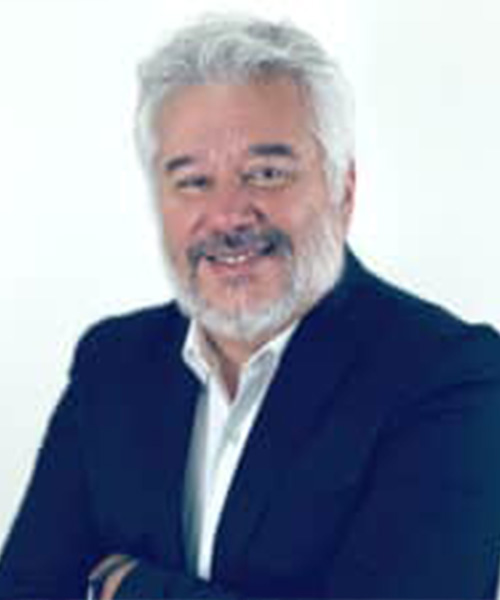
Rev. Dr. Reginaldo Paranhos Braga Jr. is a Brazilian theologian, educator, ordained minister, and global justice advocate whose work bridges theological education, liberation theology, critical pedagogy, intercultural ministry, migration, and community transformation. Born in Recife, Brazil, he has served communities throughout Latin America and the United States for more than two decades. He currently serves as Associate Professor of Religion and Education at the Interdenominational Theological Center (ITC) in Atlanta, Georgia, where he teaches in the Master of Divinity and Doctor of Ministry programs.
Dr. Braga holds degrees in theology, Portuguese and English, New Testament studies, and religion and education from institutions in Brazil and the United States, including Princeton Theological Seminary, Columbia University, and Union Theological Seminary. His scholarship is deeply influenced by Brazilian educator Paulo Freire and explores education as a transformative practice that strengthens dignity, identity, agency, healing, and social change. His concept of a “pedagogy of grace” brings theology and critical education into dialogue as pathways toward liberation and community renewal.
At ITC, Dr. Braga connects Latin American and Black liberation theologies with multicultural education, decolonial thought, Global South perspectives, and justice-centered ministry. He has also served as Vice President for Academic and Student Affairs, coordinated ITC’s Master of Arts in Religion and Education program, and supported international immersion initiatives.
Ordained in Brazil and later as a Minister of Word and Sacrament in the Presbyterian Church (USA), Dr. Braga has extensive experience serving multicultural and immigrant communities. His ministry has included developing immigration legal clinics, language and computer-literacy programs, and support systems for immigrant families. Following September 11, 2001, he served as a volunteer chaplain and later as Lead Chaplain for the American Red Cross in New York.
Dr. Braga is the founder of Point of Encounter, a nonprofit supporting faith-rooted social innovation and community development in Brazil and the United States. Since 2025, he has also served as Director of ECM Iberoamerica, connecting communities across Spain, Portugal, Latin America, and beyond through his multilingual ministry in Portuguese, Spanish, and English.
His partnership with The God Box Foundation and God Box Tours, representing ITC through its Intercultural Immersion Travel Seminar, expands his commitment to experiential education and cross-cultural engagement. Through teaching, ministry, scholarship, and community service, Dr. Braga advances education as a sacred practice that restores dignity, builds community, and transforms lives across cultural, racial, linguistic, and national boundaries.
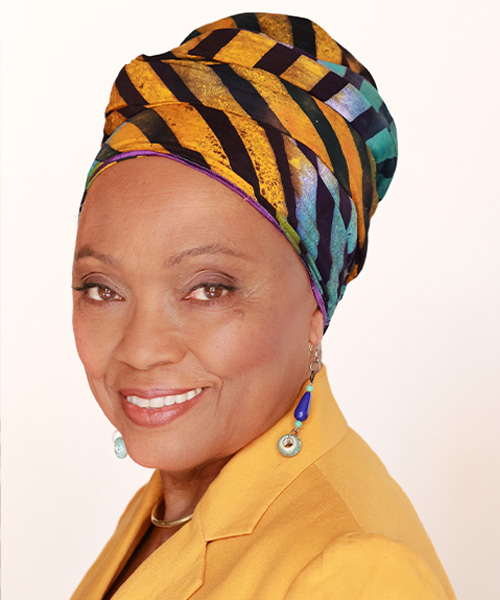
Velma E. Love, PhD is an author, educator, and scholar whose work explores the intersections of African Indigenous Knowledges, ancestral wisdom, spirituality, and social transformation. She serves as Director of the Doctor of Ministry Program at the Interdenominational Theological Center (ITC), where she integrates Africentric thought, human-centered design, and prophetic problem solving in theological education.
She is the author of Divining the Self: A Study in Yoruba Myth and Human Consciousness (Penn State University Press, 2012) and Co-Editor of Ancestral Wisdom: Sacred Stories of Contact, Healing, and Care (Open Press, 2025). Her scholarship and teaching invite communities into the work of remembrance, healing, and world-making through African cosmologies, narrative practice, and sacred imagination.
Dr. Love has taught at Florida A&M University, Howard University School of Divinity, Allen University, and ITC. She is Co-Founder of the Lee Thompson Young Foundation, a nonprofit organization dedicated to mental health education and advocacy, and is currently developing the Soul Script Meditation App, an Afrocentric digital sanctuary for ancestral mindfulness and spiritual practice.
Along sider her academic work, Dr. Love is a Dagara Cowrie Shell Diviner, integrating African Indigenous Knowledges and spiritual practices with teaching, storytelling, and cultural healing. Her work bridges scholarship, spirituality, and community practice, fostering conversations that honor the richness of Pan-African religious, spiritual, and cultural traditions while imagining regenerative futures.
The Lee Thompson Young Foundation advances mental health awareness, education, and emotional well-being, with a particular focus on gifted, talented, and twice-exceptional youth, college students, and the families and educators who support them. Through educational programs, scholarships, peer support, mental health resources, and professional services, the Foundation works to reduce stigma, strengthen supportive environments, and help young people thrive emotionally and academically.
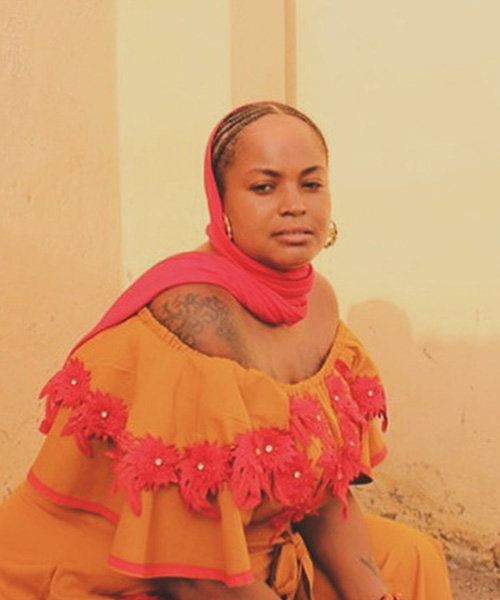
Ɔkomfo Nana Obrebea Afia Sharifa Bryan, M.S. is a poly-mystic Spiritist and an initiated Yayi Nganga Nkisi Malongo in the African Diasporic tradition of Palo Briyumba. As a transcultural interdisciplinary social practice spiritual artist and cultural preservationist, she curates community centered ecosomatic healing experiences that traverse through indigenous culture traditions and educate on lineage sacred ecologies by way of collective public rituals.
As a journeywoman whose feet have touched many lands, she pulls from the colorful diverse threads that make up her spiritual fabric to inspire folx to decolonize space and indigenize their relationship to the land as spiritual autonomy, reclamation, and reparation. It is from this apothecary of collective lineages she bridges geographies and cultures to recover the ritual remedies to meet the archipelagic memory, identity, and belonging needs of the community.
Through her independently published works under her brand, Ageno’s, she enshrines the rematriation of ancestral culture, values, and memories—a storytelling that immortalizes a resilient ecosystem and reimagines new ways of engaging in spiritual technologies and ceremonies.
She holds a Master of Science in Education degree in Reading, Writing, and Literacy from the University of Pennsylvania and a Bachelor of Arts degree in Journalism from Kutztown University.
Website: https://sharifab.com
Sharifa B. is an interdisciplinary social-practice artist and cultural preservationist whose work blends Afro-Indigenous spirituality, ancestral remembrance, land-based healing, and community engagement through participatory rituals, installations, photography, writing, and education. Her practice creates culturally rooted spaces that reconnect people with ancestral knowledge, sacred ecology, and the land while advancing healing, cultural reclamation, and collective belonging.
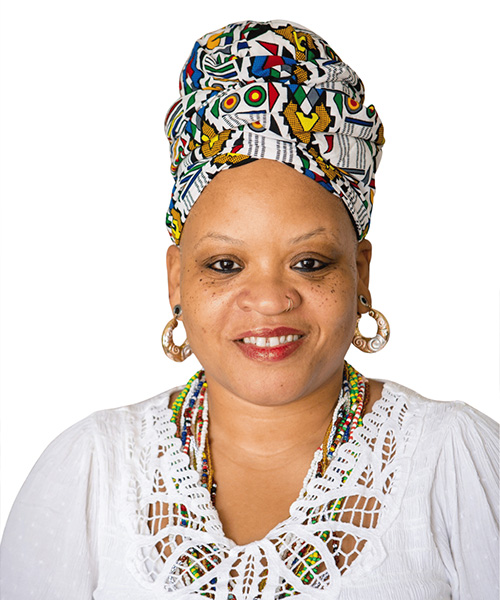
Iya Funlayo E. Wood, PhD, affectionately known as Your Favorite Scholar-Priestess, is the founder and Chief Priestess of Ile Ase Ire, Inc., the founding director of the African and Diasporic Religious Studies Association (ADRSA), and the founding Dean of Ase Ire Communiversity. She earned her PhD in African and African American Studies and Religion at Harvard University and she her work has been published in scholarly and popular venues. A dedicated public scholar, Iya Funlayo lectures frequently and she has appeared in documentaries for PBS and the National Geographic Channel.
The African & Diasporic Religious Studies Association (ADRSA) is dedicated to supporting scholarship in African and Diasporic Religions. We are committed to exchange between scholars and communities with a focus on bringing underrepresented voices to the fore.
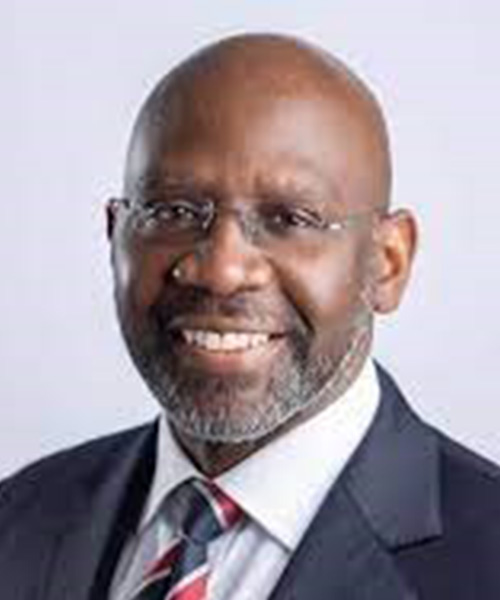
Dr. Robert M. Waterman is a Pastor…in fact, the fifth Pastor of Antioch Baptist Church located in Brooklyn, New York for over 23 years. Dr. Waterman is married to Lola Oguntunde Waterman Esq., and they are the proud loving parents of three precious daughters (Nia, Imani and Jada). Dr. Waterman’s spiritual vision for Antioch is Restoring Life by Destroying the Barriers, taken from Ephesians 2:14-22. Dr. Waterman has brought many gifts to Antioch – the three most notable being his exuberance of youth, a willingness to get the job done and an ebullient spirituality. Spiritually, Dr. Waterman tries to impress on people that God desires our commitment through our worship, and has been given the labeled “The Preacher of Thunder” by the late Dr. William A. Jones. He encourages his congregation to know God so that hearts, and thereby lives, can be changed. In his twentieth year, Dr. Waterman’s focus was on moving the church through the Covid-19 pandemic toward building God’s Kingdom by restoring people, both spiritually and physically. Antioch is concerned about the health and spirituality of the community. Building the Church, Building the People, and Building the Community. Antioch continues on its path, uniting for fellowship and following Christ. Serves in an ex-officio capacity on the not-for- profit, Antioch Development Corp and Antioch Community Services boards.
Being born in Brooklyn, New York and raised in Hemingway, South Carolina, Dr. worked as a Mechanical Engineer for nearly twenty years. Dr. Waterman is ever evolving and is a very ambitious and staunch businessman in his spare time when he is not actively operating the church. He fully embodies the notion that he truly can do all things through Christ…
Robert M. Waterman is Doctor…and a firm believer in continuing education. He obtained his Doctorate in Ministry from Drew University and his Masters of Divinity from the New York Theological Seminary. He holds an undergraduate degree from The City University of New York at Hunter College, with a major in Political Science and a minor in Philosophy and Communications. He also has an Associate degree in Public Administration.
At Drew University, in writing his thesis, he felt compelled to research and create a new form of outreach for the 21st Century because he had observed that his local community would not enter the church edifice. He formed teams and went out to survey the neighborhoods as well as his congregation, seeking a remedy. After this inspired knowledge-gathering period, he decided to build a Sober Cafe where the churched and the un-churched can mix and mingle without barriers.
Robert M. Waterman is an Educator…a substitute teacher in the DOE, teaching mathematics for over six years in District 16 community. Currently serving as the Medgar Evers Career Services Manager. Was a Senior Director and Assistant to Dean/Conduct Officer of Student Affairs at Medgar Evers College for the last 6 ½ years. A senior director to evaluate, coordinate and implement all judicial matters related to the Student Code of Conduct. To Act as an ombudsman for student issues and concern regarding their academic careers. Director over the Empowerment and Development services. Assists and facilitates all co-curricular student activity programs and events. Oversees the day-to-day operations of the department including hiring, training, evaluating, and supervising full and part-time staff, and graduate assistants.
Robert M. Waterman is a Proprietor…of the only sober lounge in Bedford Stuyvesant, Canticles. Canticles is a sober lounge/eatery where Dr. Waterman is the weekly host of a range of engaging activities such as: Open Mic; Poetry Slams; Spoken Word; Live Jazz Music; Talent Shows; Speed Dating; and Family Game Night. He also started a very popular forum called “Conversations” held bi-monthly at 7pm on Sundays, where again, those who do not necessarily attend church can come out to relax, mingle and partake in Christian-based as well as secular topics from Dating in the Church to The Recession. Robert M. Waterman is an Activist…He is a lifetime member of the NAACP and serves on Community Board # 3 as the former Chairperson of the Transportation Committee and now serves as the Ecumenical Committee Chairman. Dr. Waterman is a part of the Black Brooklyn Empowerment Convention as the Chair of Securing Our Institutions Cluster. He serves as the Ecumenical Chair in Brooklyn for BLCA, Black Leadership Commission Aids, Watchful Eyes and is the President of the A.A.C.E.O., African American Clergy and Elected Officials Organization of Brooklyn. The Chair of the Trustee Board of Interfaith Medical Hospital and the Vice Chair of the Trustee Board of One Brooklyn Health and lastly,
Robert M. Waterman is an Author…of the book “God has left the Building.” After graduation in 2009, Dr. Waterman began to self-publish his thesis which is heavily rooted in and based on The Great Commission.
The title of the book truly exemplifies and encompasses the content of his writing as the church as a whole is in dire need of a redesign of its outreach methods. The book contains the systematic process in which to create opportunities for evangelism and outreach, which includes all of the surveys and information-gathering documents that his teams utilized.
His latest book, “From Scattered to Unstoppable Dreams.” Dr. Waterman writes about how so many dreams have been shattered recently in light of the COVID-19 pandemic. People have been left with shattered dreams and feeling unsure about what the future holds. Waterman points out that the reader can be confident as they navigate these changes as long as God is at their center. He believes that when God is at the center of our vision, our life will turn out more beautiful than we ever could have imagined.
Waterman’s timely book takes time to explore and teach the reader how to clearly define their vision, how to get on the same page with God, how to start over when all is lost, the difference between your dreams and God’s dreams for you, why God delays blessings, and what it means to live a limitless life.
Throughout Unstoppable Dreams, Waterman makes it known that whenever everything seems shattered, God remains. When you trust God, a life of unstoppable dreams is simply waiting!
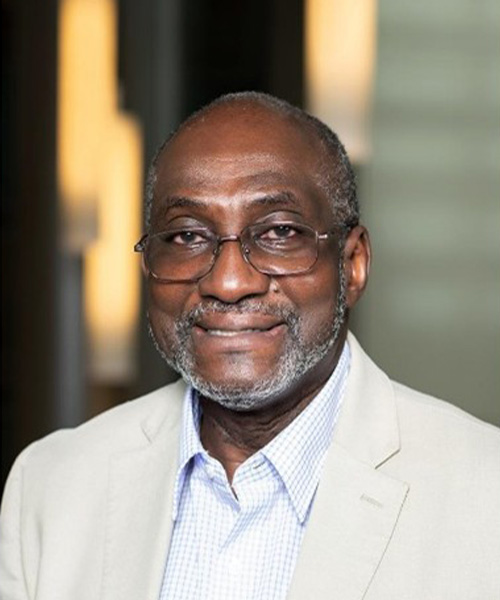
Emmanuel Yartekwei Lartey was born in Accra, Ghana. He holds degrees in Psychology and Statistics BA (Hons.), University of Ghana, 1978; MA en passant, and PhD, University of Birmingham, UK, in Pastoral Theology, Religion and Health, 1984. He is currently the Charles Howard Candler Professor of Pastoral Theology and Spiritual Care at Candler School of Theology, Emory University in Atlanta, GA. He began his teaching career as Lecturer in practical theology at Trinity Theological Seminary in Legon, Ghana, in 1984. He has served as Senior Lecturer in Pastoral Studies and Practical Theology in the Department of Theology, University of Birmingham, UK. He was Professor of Pastoral Theology and Care at Columbia Theological Seminary, Decatur, Georgia and the Director from 2003-2009 of the Doctoral programs (ThD) in Pastoral Counseling of the Atlanta Theological Association.
Professor Lartey has served as Chairperson of the British and Irish Association for Practical Theology (BIAPT); President of the International Council for Pastoral Care and Counseling (ICPCC); and Treasurer of the International Academy for Practical Theology (IAPT). He served as Editor of the Journal of Pastoral Theology (2013- 2017).

Commissioned as a minister in the Methodist Church, Ghana in 1978, Dr Lartey has served as Circuit minister, parish pastor and university Chaplain. In the USA since 2001, he has been pastor of the Ghana Interdenominational Church, in Atlanta, (2003 – 2006). He established and pastored the United Ghana Christian Church, in Atlanta, (2007 – 2010) and has served as Senior Pastor of the Wesley Methodist Church, Atlanta (2014 – 2019). In 2020 he was appointed Suffragan Bishop (Bishop’s Deputy) and in August 2022 was elected Bishop of the North America Diocese of the Methodist Church, Ghana.
Dr Lartey teaches courses in ‘Introduction to Pastoral Care’, “Spiritual Care in African Religious Cultures”, ‘International perspectives on pastoral care’ and ‘Inter Religious Spiritual Care’. In addition to 34 chapters in edited volumes and over 25 articles in peer-reviewed journals, Professor Lartey’s single authored book publications include Pastoral Counselling in Intercultural Perspective, (1987); the internationally acclaimed In Living Color: An Intercultural Approach to Pastoral Care and Counselling, (1997/2003) and Pastoral Theology in an Intercultural World (2006). Postcolonializing God: An African practical theology (2013). He co-edited (with Tapiwa Mucherera) Pastoral Care, Health, Healing and Wholeness in African Contexts, (2017). His book publications include Postcolonial Practices of Care: A Project of Togetherness during Covid-19 and Racial Violence (2022) (co-edited with Hellena Moon), and What is Spiritual Care: Perspectives from different professions and Religious Traditions (2025) (coedited with Pamela Cooper-White & Claudia Kohli-Reichenbach). His latest book is titled Spiritual Care in African Religious Cultures: Sacred Wisdom for the care of persons in an intercultural world. (Georgetown University Press, 2026).
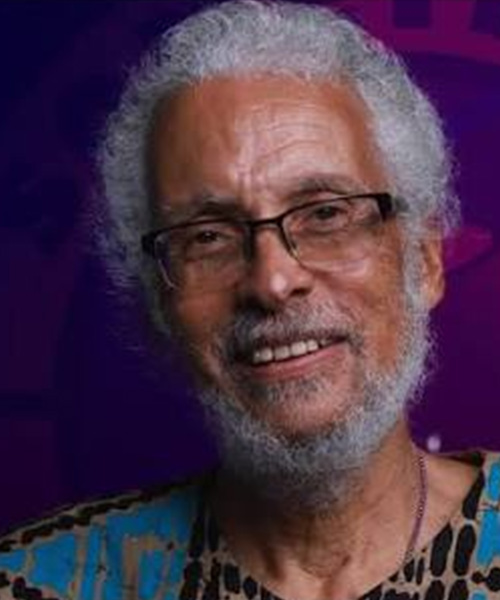
Sar Ahmadiel Ben Yehudah is a senior spiritual leader, educator, public spokesperson, and longtime representative of the African Hebrew Israelites of Jerusalem, a community centered in the Village of Peace in Dimona, Israel. For decades, he has served as one of the community’s most prominent public voices, addressing questions of African and Hebrew identity, spirituality, history, cultural restoration, community development, and the relationship of African-descended peoples to the biblical heritage of Israel. Independent reporting by the Associated Press identifies him as both a community elder and spokesperson, while organizations familiar with his work have identified him as the community’s Minister of Information and National Spokesman.
The African Hebrew Israelites of Jerusalem emerged from a broader twentieth-century movement among African Americans seeking to reclaim spiritual and historical connections to the biblical Israelites and to Africa. Under the leadership of the late Ben Ammi Ben-Israel, members of the movement left the United States in the 1960s, spent a period in Liberia, and subsequently established their community in Israel. Today, the Village of Peace in Dimona remains the spiritual and communal center of the movement. Sar Ahmadiel has become an important interpreter of this history and the community’s understanding of itself for audiences both within and outside Israel.

Central to his teaching is the relationship between African identity, biblical history, spiritual consciousness, and cultural restoration. In public lectures and interviews, Sar Ahmadiel has addressed the historical development of Hebrew Israelite communities in the United States, the African Hebrew Israelites’ understanding of their Judean heritage, and the importance of restoring knowledge of African peoples’ spiritual and cultural origins. In a 2024 conversation with scholar and commentator Dr. Marc Lamont Hill, he was featured specifically to discuss the question “Who Are the Hebrew Israelites?” and the history, beliefs, identity, and contemporary significance of the tradition.
His public ministry also emphasizes what he describes as spiritual transformation—the need for people of African descent to reconnect spiritual practice with cultural identity, ethical living, collective responsibility, and the restoration of community. His teachings have circulated internationally through lectures, conferences, interviews, educational programs, and African-centered media. The African Hebrew Israelite community’s own educational platform, Breath of Life, lists Ahmadiel among its teachers, reflecting his continuing role in transmitting the community’s spiritual philosophy and historical understanding to new generations.
Sar Ahmadiel’s leadership has also involved representing the African Hebrew Israelites during significant moments in the community’s relationship with Israeli society and government.
Following the death of Ben Ammi Ben-Israel in 2014, Ahmadiel publicly articulated the community’s commitment to continuing its founder’s spiritual and social vision. More recently, international news organizations have repeatedly turned to him as a spokesperson regarding the community’s history, identity, residency concerns, and its longstanding presence in Israel.
In describing that identity, Sar Ahmadiel has emphasized the community’s understanding of itself as Judean by tribal affiliation and as part of a much longer historical continuity connecting biblical Israel, Africa, and African-descended peoples. That belief is a religious and historical claim of the African Hebrew Israelite community rather than a universally accepted scholarly conclusion, so I would present it in an official biography as the community’s tradition rather than as settled historical fact.
The community in which he serves has developed a distinctive model of collective spiritual and social life. Reporting from Dimona describes a community that combines biblical observance with vegan living, health consciousness, Hebrew and Black-history education, communal institutions, cultural celebrations, and an emphasis on disciplined community life. Sar Ahmadiel’s public work frequently situates these practices within a broader philosophy of spiritual renewal and African cultural self-determination.
Through decades of spiritual leadership, public education, cultural advocacy, and international dialogue, Sar Ahmadiel Ben Yehudah has become an important voice within the African Hebrew Israelite tradition and in wider conversations about African Diasporic spirituality, identity, history, and self-determination. His work invites consideration of how biblical tradition, African consciousness, communal life, and ancestral identity intersect in the continuing search for spiritual restoration among African-descended peoples.
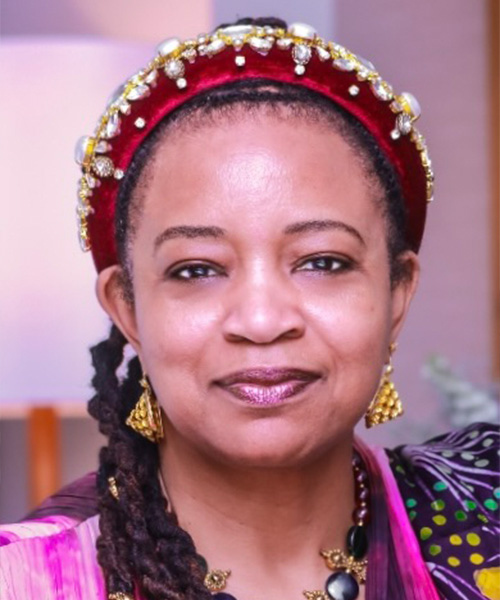
Her Royal Majesty Queen Mother Dr. Dòwòti Désir (Sêmévo I) is Queen Mother of the African Diaspora in the Republic of Benin, where she was enthroned at the Royal Palace of Agonlin in and admitted to the Haut Conseil des Rois du Bénin (High Council of Kings of Benin). A Queen Mother since 2020, she serves as Ambassador-at-Large of the High Council and is internationally recognized for advancing Pan-African diplomacy, cultural sovereignty, traditional African leadership, and the rights of African descendant communities worldwide.
Born in Port-au-Prince, Haiti, to Haitian and Cuban parents, Queen Mother Désir is the Founder of The Royal Palace of the African Diaspora Bureau & Advocacy Society, an organization dedicated to supporting Africans of the Diaspora pursuing repatriation, transnational citizenship, cultural renewal, and institution building throughout Africa. At the center of this work is the Imperial Corps Agoodjié of the African Diaspora, an international women’s leadership initiative inspired by the historic women warriors of the Kingdom of Dahomey. Through educational programs, cultural exchanges, and pilgrimages to Benin and Colombia, the initiative strengthens relationships between African women on the continent and throughout the Diaspora.
A respected scholar, curator, and international policy advocate, Queen Mother Désir currently serves as a UNESCO expert advising the Ministry of Foreign Affairs of Ghana on reparations for the African Diaspora and is a member of the God Box Talks Steering Committee in Ghana. She divides her time between Cotonou, Benin, and New York State, where she teaches underserved youth and adult learners at Dutchess Community College. She also serves on the Executive Committee and as Gala Chairperson for the Hip Hop Institute for Peace’s #KickRacism International Decade for People of African Descent Gala, is Guest Co-Curator of the 2027 exhibition Flip It & Reverse It at the Pérez Art Museum of Miami and is a member of the Advisory Board of the Lucie Foundation.
An internationally respected interfaith leader, Queen Mother Désir is a Manbo Asogwe, the highest priestly rank in Haitian Vodou. In 2017 she founded the AfroAtlantic Theologies & Treaties Institute to advance scholarship and dialogue on African and Afro-Atlantic sacred traditions. She previously served as Ambassador-at-Large (Gwètòdé de Outre-Mer) for the National Confederation of Haitian Vodou Practitioners, representing the late Ati Nasyonal Max G. Beauvoir throughout the African Diaspora. Throughout her career she has helped expand recognition of Haitian Vodou within civic and interfaith institutions, becoming the first Vodou priest licensed to solemnize marriages in New York State, the first Vodou priest to complete the Prophetic Leadership School of Faith’s social justice clergy cohort, and the first Vodou officiant selected as a Fellow of the Interfaith Center of New York’s Civic Leadership Academy.
Her leadership has been recognized with numerous honors, including the President’s Lifetime Achievement Award on Chieftaincy from the International Clergy Association, the Oni Award from the International Black Women’s Congress, and the Black Divas Award for her advocacy of Black maternal health. She was also the inaugural Scholar-in-Residence of the Caribbean Cultural Center African Diaspora Institute and serves on the Academic Council of the Pan African Heritage World Museum in Ghana.
For more than three decades Queen Mother Désir has worked at the intersection of human rights, cultural diplomacy, museums, education, and public policy. She is the former Executive Director
of the Malcolm X & Dr. Betty Shabazz Memorial and Educational Center at the historic Audubon Ballroom in New York City and has held senior positions at the Studio Museum in Harlem, the Schomburg Center for Research in Black Culture, the Lower Manhattan Cultural Council, Arts International, and the Metropolitan Transportation Authority’s Arts for Transit program. She also served for more than fifteen years as a consultant and policy advisor to the African Burial Ground National Monument in New York City.
Her international public service includes leadership roles with the United Nations, UNESCO, the International Labour Organization, the African Union’s ECOSOCC consultations, the International Movement for Reparations, the DDPA Watch Group, the NGO Committee for the Elimination of Racism, Afrophobia and Colorism at the United Nations, and numerous civil society initiatives advancing implementation of the Durban Declaration and Programme of Action. Since 2001 she has participated as an advisor, expert, or delegate to major international conferences addressing racism, sustainable development, reparations, and human rights.
As an author, journalist, curator, and photographer, Queen Mother Désir’s scholarship examines memory, monuments, reparations, Afro-Atlantic religions, spatial justice, and the cultural consequences of the transatlantic slave trade. Her publications include Essays in Human Rights: A Vodou Priest’s Perspective; Réparations: Une exigence urgente pour l’Humanité (co-author); Personal Visions: Photographs of Adger W. Cowans (co-author); Wòch Kase Wòch: Redlining a Holocaust, Memorials, and the People of the AfroAtlantic; Goud Kase Goud: Conjuring Memory in Spaces of the AfroAtlantic; Wanga: Haitian Hoodoo and Waging Peace (co-author).
A sought-after lecturer, Queen Mother Désir has presented at institutions including the United Nations, Harvard Divinity School, Union Theological Seminary, Columbia University, New York University, the City University of New York, the Museum of the African Diaspora, the Caribbean Cultural Center African Diaspora Institute, the Solomon R. Guggenheim Museum, and universities and cultural institutions throughout Africa, the Caribbean, Europe, and the Americas.
Her work has been featured by Bénin Intelligence, Reuters, The New York Times, Der Spiegel, Atlanta Black Star, and numerous international media outlets. She is a consultant on African and Afro-Atlantic religions for film, television, and theatre, including projects for CBS, the Discovery Channel, and the Roundabout Theatre Company. She appears in the documentaries Dahomey, directed by Mati Diop; a film based on she scholarship, Vodou: Theology of Liberation; Sa Majesté des Mers et Océans; Malcolm’s Echo; Ancestral Voices II; and Awake Zion.
Queen Mother Désir is a graduate of Barnard College, earned a Master of Arts from the Center for Curatorial Studies, Bard College, and received the Doctor of Ministry degree in Interfaith Studies from The New Seminary. She is the mother of composer, writer, and photographer His Royal Highness Prince Martial Davis.
The Royal Palace of the African Diaspora Bureau & Advocacy Society was established in 2025 by Her Royal Majesty Queen Mother Dr. Dòwòti Désir, the Kpodjito (“She Who Birthed the Leopard”) of the African Diaspora for Bénin Republic. A private not-for-private registered in the United States, the organization fosters community development, cultural preservation, education, and civic engagement regarding the history, heritage, and ongoing issues facing the African Diaspora. The organization engages in community advocacy, social welfare initiatives, and public education to advance the civic and social well-being of the community.
Under the leadership of the Kpodjito Dr. Désir, The Royal Palace Society has organized webinars and participated in international discussions concerning legal pathways to citizenship to Bénin and other African countries. We advocate for the droit de retour (right to return), reparations, better transnational policies, bilateral agreements, or dual-citizenship frameworks that protect African descendants. We are developing a toolkit for community integration in Bénin Republic and partnering with academic and grassroots organizations in other African countries to help transnationals successfully integrate into their new host communities.
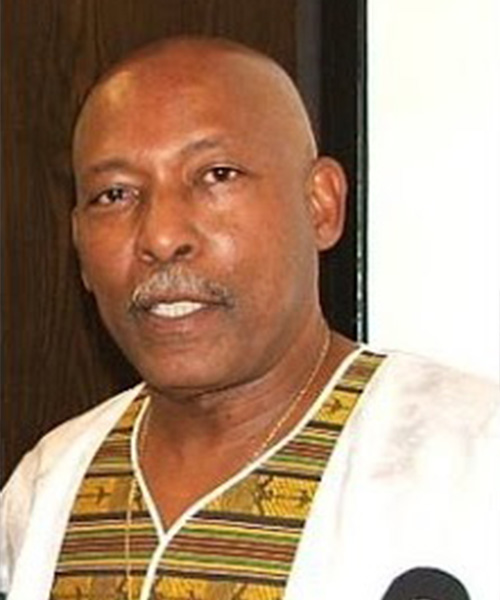
Professor James Small is a Pan-African scholar, educator, historian, organizational consultant, activist, and spiritual leader whose work is dedicated to restoring and preserving African history, culture, and spiritual traditions throughout the global African Diaspora. For more than five decades, he has connected scholarship, community engagement, and spiritual leadership to advance African historical awareness, cultural pride, and self-determination.
Raised in rural South Carolina, Small became involved in civil rights activism at an early age. He attended Savannah State University and served in the United States Navy before relocating to New York City in the mid-1960s. There, his educational, political, and spiritual work became closely connected to the Black liberation movement and the legacy of Malcolm X.
A 1971 graduate of The City College of New York (CCNY), Small was a member of the Committee of Ten associated with the historic 1969 Black and Puerto Rican student uprising. The movement challenged racial inequities and demanded greater representation, the establishment of Black and Puerto Rican Studies, and expanded educational access. He later taught in CCNY’s Africana Studies/Black Studies program for more than fifteen years and also taught at New York City Technical College. His courses explored African history, Pan-Africanism, Malcolm X, comparative African religions, and the survival of African spiritual traditions throughout the Diaspora.
Small’s longstanding commitment to Malcolm X’s legacy includes his close working relationship with Malcolm’s sister, Ella Little-Collins, who assumed leadership responsibilities within the Organization of Afro-American Unity (OAAU). He worked alongside her for more than a decade and served as the organization’s Eastern Regional Director. Through this work, he supported educational initiatives, liberation movements, and connections with communities in Africa and the Caribbean.
His spiritual experience spans multiple traditions. Small served for many years as an imam within the Muslim community carrying forward Malcolm X’s religious legacy and completed the Hajj pilgrimage to Mecca in 1974. His subsequent studies increasingly centered African traditional spiritual systems, and he is recognized as a Yoruba/Ifa priest, Babalorisha, and Priest of Oya. This breadth of experience informs his teaching on spirituality, ancestral traditions, cultural identity, and liberation.
An international lecturer, Small has addressed audiences throughout the United States, Africa, the Caribbean, and Europe. His work explores Yoruba/Ifa traditions, Akan spirituality, Vodou/Vodun, Islam, African sacred science, and the lasting effects of colonialism and enslavement. He has also led educational and cultural heritage pilgrimages that reconnect people of African descent with African histories, communities, and ancestral knowledge, maintaining longstanding cultural and business relationships with Ghana.
Professor Small has brought his historical expertise to film and television, including consulting on *Godfather of Harlem*, particularly its portrayal of Malcolm X and 1960s Harlem. His documentary appearances include *By Whatever Means Necessary: The Times of Godfather of Harlem* and *Cassius X: Becoming Ali*, which explores Muhammad Ali’s relationship with Malcolm X, the Nation of Islam, and Black political consciousness.
His organizational work includes leadership connections with the OAAU, the World African Diaspora Union, and the Association for the Study of Classical African Civilizations (ASCAC), where he previously served as Eastern Regional President. Across his teaching, activism, and spiritual leadership, Professor Small emphasizes historical knowledge, cultural preservation, and spiritual consciousness as foundations for Pan-African unity and collective advancement. Determination.
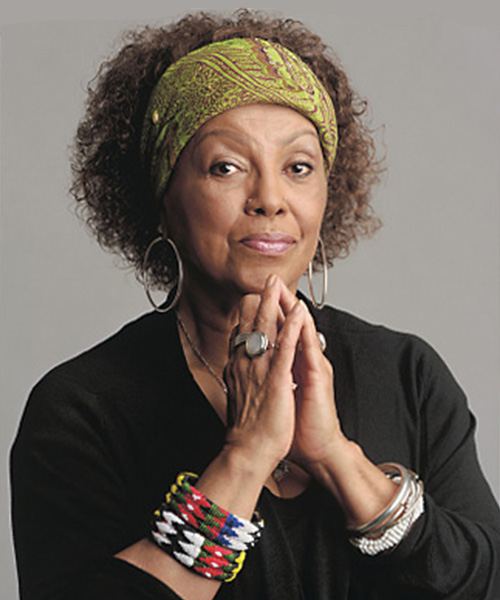
Dr. Marta Moreno Vega is an Afro-Puerto Rican scholar, educator, author, cultural activist, institution builder, cultural producer, and Yoruba priestess whose work has been instrumental in advancing the histories, spiritual traditions, artistic expressions, and lived experiences of African-descended peoples throughout the Americas. Born and raised in New York City’s El Barrio/East Harlem in a Puerto Rican family, she has devoted more than five decades to cultural equity, racial and social justice, education, and strengthening connections across the global African Diaspora. The Smithsonian recognizes her as an Afro-Puerto Rican visual artist, activist, scholar, author, educator, and Yoruba priestess.
Dr. Moreno Vega earned her undergraduate and master’s degrees in education from New York University and received her doctorate from Temple University in 1995, where her doctoral research examined Yoruba traditions as practiced in urban communities. Her scholarship has centered extensively on African and African Diasporic religions, Afro-Puerto Rican and Afro-Latinx identity, cultural equity, spirituality, and the ways African traditions have survived, transformed, and flourished throughout the Americas.
A pioneering cultural institution builder, Dr. Moreno Vega was selected as the second Director of El Museo del Barrio in 1971, helping guide the museum during a formative period in its development and its efforts to center Puerto Rican, Indigenous, and African artistic heritage. During her leadership, El Museo presented the landmark exhibition The Art Heritage of Puerto Rico: Pre-Columbian to the Present in collaboration with The Metropolitan Museum of Art.
In 1976, she founded what became the Caribbean Cultural Center African Diaspora Institute (CCCADI), envisioning an institution that would explore and strengthen the cultural connections among African-descended communities throughout the Caribbean, the Americas, and the broader African Diaspora. She provided visionary leadership to the organization for more than four decades, with CCCADI crediting her with establishing an enduring institution dedicated to African Diasporic arts, cultural memory, education, research, cultural equity, and racial and social justice.
Her institution-building work extends beyond CCCADI. Dr. Moreno Vega has been involved in the establishment and leadership of numerous cultural and social justice initiatives, including the Association of Hispanic Arts, Network of Centers of Color, Roundtable of Institutions of Color, Global Afro-Latino and Caribbean Initiative, Creative Justice Initiative, Corredor Afro, and Afro-Global Network. In 2017, she founded the Creative Justice Initiative as an intergenerational platform confronting systemic inequity and chronic underfunding affecting arts and cultural organizations representing historically marginalized communities.
As an educator, Dr. Moreno Vega has taught at institutions including New York University, Hunter College–CUNY, the Inter American University of Puerto Rico, and the Center for Advanced Studies on Puerto Rico and the Caribbean. At NYU Tisch School of the Arts, she has contributed to the Department of Art & Public Policy, where her teaching and public programming have examined the relationship among art, cultural expression, justice, equity, public narrative, and social transformation.
Dr. Moreno Vega is the author of The Altar of My Soul and the memoir When the Spirits Dance Mambo: Growing Up Nuyorican in El Barrio, which explores family, spirituality, Afro-Caribbean culture, music, identity, and growing up in East Harlem. She also directed and co-produced a documentary bearing the When the Spirits Dance Mambo title and has served as chief editor of Women Warriors of the Afro-Latina Diaspora. Her work as an author, curator, and cultural producer has consistently brought African-based spirituality and Afro-Latinx cultural histories into broader academic, artistic, and public conversations.
Through scholarship, spirituality, advocacy, education, and institution building, Dr. Marta Moreno Vega has helped create lasting spaces for African-descended communities to reclaim their histories, honor ancestral knowledge, affirm their cultural identities, and build connections across geographic, religious, and generational boundaries. Her life’s work reflects an enduring commitment to cultural memory, equity, self-determination, and the continuity of African spiritual and cultural traditions throughout the Diaspora.

President of the Creative Justice Initiative, Founder of the Caribbean Cultural Center African Diaspora Institute and Co-Founder of Corredor Afro Project
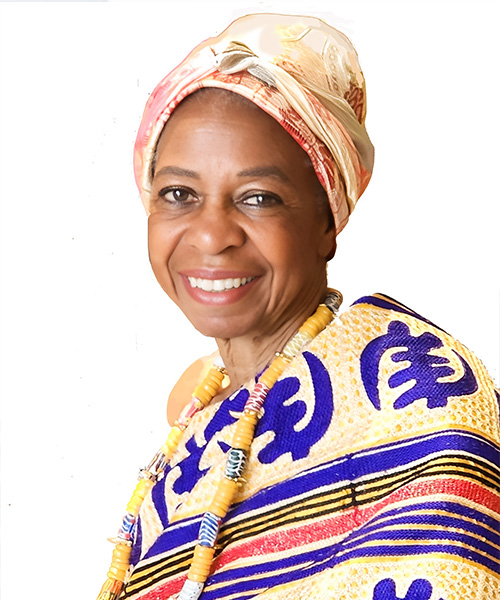
Nana Aba Bantuma I, Rev. Dr. Iva E. Carruthers, is an internationally respected theologian, sociologist, educator, author, social justice advocate, and Pan-African faith leader. In 2025, she was officially enstooled as Developmental Queen Mother of Cape Coast, Ghana, recognizing her lifelong commitment to community development, cultural restoration, reparatory justice, and strengthening relationships between Africa and its global diaspora.
Dr. Carruthers is a co-founder, trustee, and General Secretary Emerita of the Samuel DeWitt Proctor Conference (SDPC), an interdenominational organization rooted in the African American faith tradition and committed to justice and human rights. SDPC is both a nonprofit organization and a United Nations Non-Governmental Organization. As its founding Chief Executive Officer, Dr. Carruthers helped establish SDPC as an influential international network of clergy, lay leaders, scholars, advocates, and activists.
She currently serves as an affiliate faculty member at McCormick Theological Seminary in Chicago and is Professor Emerita and former Chair of the Department of Sociology at Northeastern Illinois University. She previously served as Executive Director of the Black Theology Project and President of the Urban Outreach Foundation. Throughout her career, she has cultivated interdenominational and interfaith dialogue, supported community-development initiatives, and led interdisciplinary study tours and justice-advocacy delegations across the United States, the Caribbean, South America, and Africa.
A pioneer at the intersection of education and technology, Dr. Carruthers was the founding president of Nexus Unlimited, an information and educational technology firm. She was appointed to a White House advisory initiative focused on the National Information Infrastructure, and educational software developed under her leadership received a Computerworld Smithsonian Award. She is also the founder of Lois House, an urban retreat center in Chicago.
Dr. Carruthers has spoken before numerous national and international audiences, including United Nations Civil Society Forums. She served as a delegate to the 2001 United Nations World Conference Against Racism, Racial Discrimination, Xenophobia and Related Intolerance. A former member of the National African American Reparations Commission, she continues to advance initiatives related to the United Nations International Decade for People of African Descent, including work supporting the Center for Reparatory Justice, Transformation and Remediation at McCormick Theological Seminary.
Her scholarship spans sociology, theology, African and African American history, instructional technology, human rights, and reparatory justice. She is co-editor of the Illinois TransAtlantic Slave Trade Report and Blow the Trumpet in Zion: Global Vision and Action for the 21st Century Black Church. She has authored and edited numerous publications and educational resources, including The Church and Reparations, which was distributed internationally by the United Church of Christ in multiple languages.
Dr. Carruthers earned a Bachelor of Arts from the University of Illinois, a Master of Arts and Doctor of Philosophy in Sociology from Northwestern University, and a Master of Theological Studies from Garrett-Evangelical Theological Seminary. She also received an honorary Doctor of Humane Letters from Meadville Lombard Theological School and completed postdoctoral studies supported by several distinguished institutions and foundations.
Her many honors include Northeastern Illinois University’s Lifetime Achievement Award, the Woman Entrepreneur of the Year Award presented by the National Foundation for Women Legislators and the U.S. Small Business Administration, and Ebony magazine’s Outstanding Mother Award for Mentoring. She was inducted into The History Makers and featured in the Women Alive! A Legacy of Social Justice exhibition. Her portrait is displayed in the International Hall of Honor at the Martin Luther King Jr. International Chapel at Morehouse College.
Dr. Carruthers is a lifetime trustee of Chicago Theological Seminary and has served as a trustee for the American Baptist College, Shared Interest, and Bread for the World. She is also the devoted mother of two sons.
As Nana Aba Bantuma I, she brings her extensive experience in ministry, scholarship, advocacy, institution-building, and Pan-African engagement to her sacred responsibility as Developmental Queen Mother. Her leadership embodies a lifetime of courageous service dedicated to justice, spiritual transformation, cultural preservation, and the collective advancement of African people throughout the world.